
Every church has them: the elderly widow who can't make it to Sunday service anymore. The longtime member recovering from surgery. The shut-in who hasn't left their apartment in months.
These are the people who built your church. They taught Sunday school for 30 years. They served on every committee. Now they need the church to care for them.
But how do you actually do it? Most churches struggle to maintain consistent contact with homebound members. Volunteer care teams start strong but fade. Phone trees get forgotten. People fall through the cracks.
The Care Ministry Challenge
Here's the math that most pastors face:
Your church has 25 homebound or elderly members who live alone. You have 5 volunteers willing to make phone calls. That's 5 calls per volunteer per week just to reach everyone once.
But once a week isn't enough for someone who lives alone and might fall, have a medical emergency, or simply need to know that someone cares.
Daily contact would be ideal. But daily contact with 25 people requires 175 phone calls per week. No volunteer team can sustain that.
Technology That Extends Your Care Ministry
The solution isn't to recruit more volunteers (though that's always good). It's to use technology for the routine check-ins so your volunteers can focus on meaningful ministry.
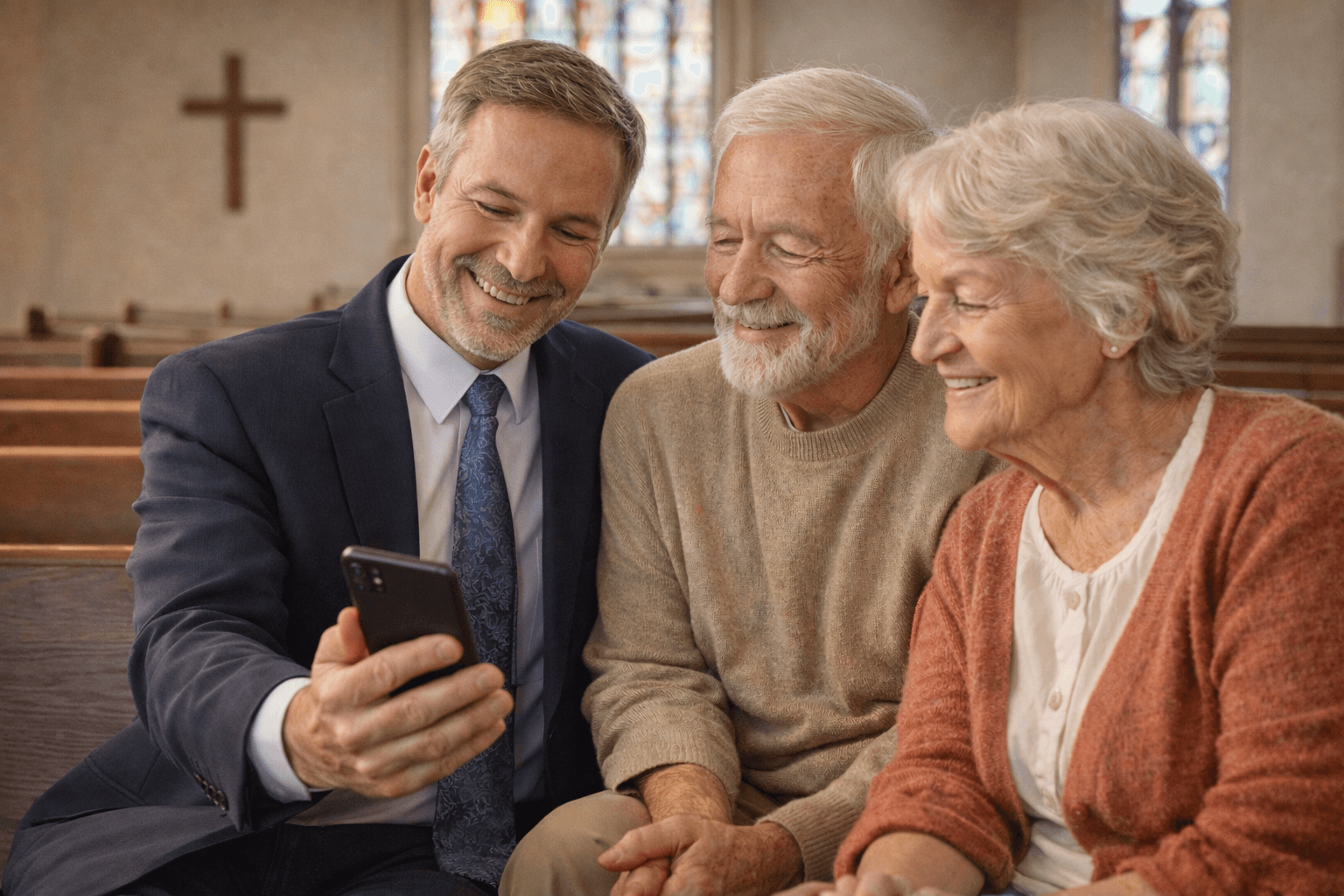
Here's how it works: each homebound member receives a daily text message from your church. "Good morning from First Baptist! Reply OK if you're doing well today." They text back OK, and that's it.
If they don't reply within a couple hours, they get a phone call. "This is your daily check-in from First Baptist. Press 1 if you're doing well." Works on landlines too — perfect for elderly members without smartphones.
If they don't respond to either, your care team gets notified. Now you know exactly who needs a visit or a personal call today.
Why This Works for Churches
Everyone gets checked on daily. Not weekly, not monthly — every single day. No one falls through the cracks because you ran out of volunteer hours.
Volunteers focus on real ministry. Instead of making routine "are you okay?" calls, your care team spends their time on visits, prayer, and meaningful conversation with members who actually need it.
It feels like the church caring. The message comes from your church, customized with your name. It's a daily reminder that their church family is thinking of them.
Families have peace of mind. When a member's adult children live out of state, they worry. Knowing that the church checks on Mom or Dad every single day is enormously comforting.
The Theological Case for Technology in Care Ministry
Some might wonder: shouldn't care be personal, not automated?
Yes — and that's exactly the point. The automation handles the daily "are you alive and okay?" check. It frees your people to do what technology cannot: visit, pray, listen, comfort, and be present.
Think of it like this: the check-in system is the shepherd's count. It tells you quickly if any sheep are missing. The real ministry happens when you go looking for the one who didn't check in.